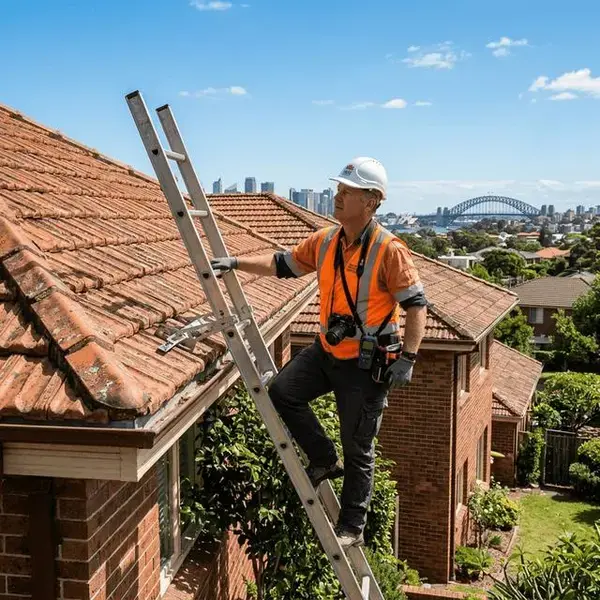
Whether you’ve booked a pre-purchase inspection before buying a home, a stage inspection during construction, or a post-handover check after your builder has finished — inspection day is where everything becomes real. Understanding what happens from start to finish removes the anxiety and lets you get the most from your certifier’s expertise.
This guide walks you through exactly what to expect on the day of a building inspection with No1 Building Services.
Before the Inspector Arrives
What You Should Prepare
A few simple steps on your end ensure the inspection runs smoothly and nothing gets missed:
- Unlock all areas. Make sure every room, roof hatch, subfloor access panel, and garage is unlocked and accessible. Inspectors cannot assess what they cannot reach — and inaccessible areas must be noted as such in the report.
- Clear the subfloor if possible. If your property has a subfloor void, remove any boxes, stored items, or obstacles near the access hatch. Getting under the house is one of the most important parts of the inspection.
- Leave utilities connected. For pre-purchase and post-handover inspections, the inspector needs to test power points, light switches, plumbing fixtures, and exhaust fans. If the water or electricity has been disconnected, parts of the inspection cannot be completed.
- Be on time or arrange access. If you are not attending in person, ensure the real estate agent, vendor, or builder is present to provide access exactly at the scheduled time.
Should You Attend?
Yes — and we actively encourage it, particularly for the final 30 minutes.
Walking through the property with your inspector is one of the most valuable things you can do. It allows you to:
- Ask questions in real time as defects are identified
- Understand the severity and context of each finding
- Prioritise what to address first
- Get verbal guidance on items that are difficult to convey in photos alone
If you cannot attend the full inspection (which typically takes 2–4 hours depending on property size), ask if you can join for the walkthrough at the end. Most experienced inspectors will accommodate this.
What Happens During the Inspection
Hour 1: Exterior and Site
The inspector begins outside, working around the entire perimeter of the building before entering. This includes:
- Roof inspection — Where safe roof access exists, your inspector will physically get onto the roof to assess tile or iron cladding, ridge capping, flashings, valleys, and gutters. From ground level, a pair of binoculars is used where ladder or roof access is not safe.
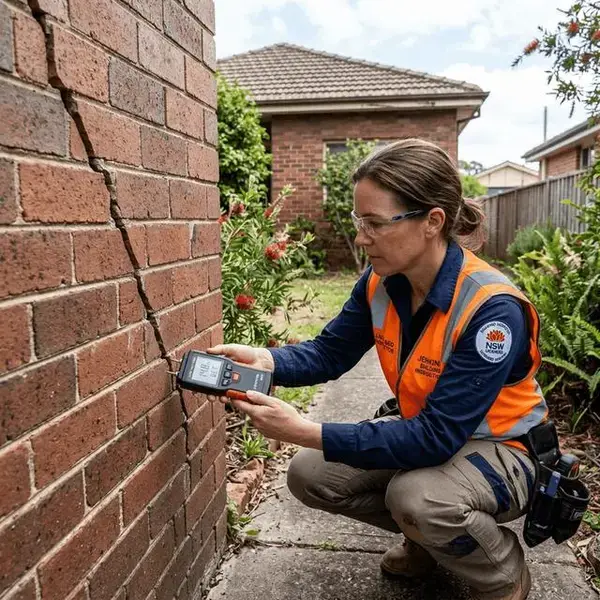
- External walls — Every elevation is checked for structural cracking patterns, render delamination, spalling brickwork, damaged weep holes, and signs of moisture penetration.
- Retaining walls and drainage — Overloaded or poorly drained retaining walls are one of the most commonly missed defects in NSW residential inspections. We assess lean, cracking, and drainage adequacy.
- Site drainage — Incorrect site falls that direct water toward the building foundation are a significant long-term risk. We check surface gradients around the perimeter.
- Timber elements — Pergolas, decks, fascia boards, and external timber elements are checked for rot, insect damage, and structural adequacy of fixings.
A thorough external inspection typically takes 45–60 minutes on a standard suburban home. Rushing this stage is how significant defects get missed.
Hour 2: Roof Void and Subfloor
These are the two most uncomfortable — and most revealing — areas of any property inspection.
Ceiling void (roof space):
The inspector enters through the manhole and physically crawls through the ceiling space. In this space, your certifier is looking at:
- Roof framing: sagging, cracked, undersized, or damaged timber members
- Evidence of water ingress: staining, mould, damaged sarking
- Insulation condition and correct installation
- Any modifications made without structural engineering approval
Subfloor void (where applicable):
For older Sydney homes on timber stumps, the subfloor contains more hidden problems than anywhere else in the building. The inspector crawls under the house to assess:
- Bearers and joists for rot, insect damage, and inadequate size
- Brick piers for cracking, movement, and missing ant-capping
- Moisture levels: standing water, excessive humidity, high moisture readings in timber
- Subfloor ventilation adequacy
Clients are often surprised to learn that subfloor moisture damage is the most expensive structural defect we find. It is invisible from above and only discovered by going underneath.
Hours 2–3: Internal Inspection
The inspector works systematically through each room in the property, from top to bottom, using a consistent methodology:
Every room assessment includes:
- Ceiling: cracking, staining, plasterboard condition
- Walls: cracking patterns (cosmetic versus structural), moisture readings, window and door frame alignment
- Floor: deflection, sloping, bounce — all indicators of structural issues below
- Windows and doors: operation, seal condition, frame cracking
Wet areas receive specialist attention:
- Shower recesses are tapped for drummy tiles (indicating substrate failure or membrane failure)
- Thermal imaging or moisture meters are used to detect water behind tiled surfaces without breaking anything
- Waterproofing membrane condition is assessed at floor-to-wall junctions
- Exhaust fans are tested for functionality
Laundries and kitchens:
- Plumbing connections and visible pipework are checked for signs of leaking
- Subfloor beneath these areas is given particular attention for moisture accumulation
Final Walkthrough
Before leaving, your inspector will walk through the key findings with you in plain language. This is your opportunity to ask:
- “How urgent is this defect?”
- “What is the rough cost to fix this?”
- “Should I get a specialist involved?”
- “Is this a reason to not buy / renegotiate / pull out of the contract?”
No question is too basic. This conversation is part of what you are paying for.
What the Inspector Is Looking For
Building inspectors classify defects into two categories under AS 4349.1:
| Category | Definition | Examples |
|---|---|---|
| Major defect | Likely to be dangerous or result in significant structural damage if not addressed | Structural cracking, roof framing failure, waterproofing membrane failure, subfloor moisture damage |
| Minor defect | Maintenance items, cosmetic issues, or items requiring monitoring | Hairline cracks in render, worn weatherstripping, peeling paint |
A property with only minor defects is a healthy property. A property with multiple major defects requires either a renegotiation of price or further specialist assessment before you proceed.
After the Inspection: Getting Your Report
When Do You Receive It?
All No1 Building Services inspection reports are delivered within 24 hours of the inspection in PDF format, directly to your email.
For auction buyers or buyers with a tight 5-day cooling-off period, contact us at the time of booking. We offer priority report delivery within 3–6 hours in many areas.
What Is in the Report?
A standard inspection report from No1 Building Services includes:
- Executive summary — a traffic-light defect rating (Pass / Monitor / Urgent) so you can immediately see the overall condition
- Section-by-section findings — written descriptions of every assessed area, with a defect classification for each finding
- High-resolution photographs — typically 60–150 photos, with annotations identifying exactly what the photo is showing
- Rectification guidance — each defect is accompanied by a recommendation (immediate action required / monitor and address within 12 months / maintenance item)
- Inspector’s qualifications — our reports are signed by a licensed, unrestricted NSW Private Building Certifier, not an unlicensed inspector
How to Use the Report
The inspection report is not just a document to keep on file. It is a negotiation tool.
- If you are buying at auction and the report reveals significant defects, this informs your maximum bid calculation.
- If you are buying by private treaty with a building inspection clause, the report gives you the legal basis to withdraw or renegotiate.
- If you are buying a new build and the post-handover report reveals defects, it is your primary tool for lodging a warranty claim with your builder under the Home Building Act 1989 (NSW).
Frequently Asked Questions
How long does a building inspection take?
For a standard 3–4 bedroom house, allow 2.5 to 3.5 hours. Units and apartments typically take 1.5 to 2 hours. Larger properties (5+ bedrooms, multiple levels, large subfloor areas) may take up to 4–5 hours.
Can I get a pest inspection done on the same day?
Yes. We strongly recommend combining a building inspection with a timber pest inspection (termite inspection) for any property built before 1985. Both inspectors can attend simultaneously, minimising disruption to the vendor and saving you travel time.
What if the inspector finds something serious?
Your inspector will discuss it with you immediately. Depending on the severity:
- For major structural defects, we may recommend further assessment by a structural engineer
- For suspected asbestos, we recommend a specialist asbestos assessor take samples for laboratory analysis
- For suspected electrical issues, a licensed electrician should assess before settlement
We give you an honest assessment. We do not sensationalise minor defects, and we do not downplay major ones.
Does the inspection cover the swimming pool?
Pool fencing and barriers are checked against AS 1926.1 for obvious compliance issues. A formal pool safety compliance certificate requires a separate pool safety inspection by an accredited certifier. If you need one, we can arrange this at the same time.
What areas of NSW do you cover?
We cover all of Greater Sydney and surrounding regions including the Central Coast, Blue Mountains, Illawarra, and Hunter. Contact us to confirm availability in your area.
Book Your Building Inspection
A building inspection is one of the most valuable things you can do before a property purchase, at the end of a build, or after a neighbour’s excavation works. Our licensed, unrestricted certifiers bring a level of technical depth to every inspection that standard inspection services cannot match.
Same-week scheduling is available across most of Sydney.