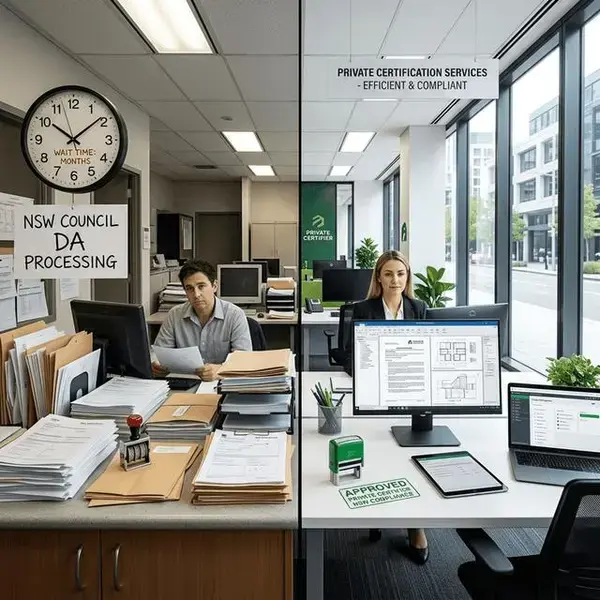
Most NSW homeowners and builders face the same decision at the start of every project: do I need a Development Application (DA) through council, or can I use a Complying Development Certificate (CDC) through a private certifier?
Getting this wrong costs months and thousands of dollars. Getting it right means your builder can mobilise in weeks, not seasons.
This guide gives you the exact framework our certifiers use to determine the right path — every time.
What Is a CDC (Complying Development Certificate)?
A Complying Development Certificate is a building approval issued by a private certifier (like No1 Building Services) or your local council without a public exhibition period, objection period, or a council planning meeting.
It exists because NSW recognises that many standard residential and commercial developments are low-risk and predictable. If your project meets a clear set of objective criteria — setbacks, height, lot size — it complies by definition. A certifier checks the rules and issues the certificate. That’s it.
The governing code: Most residential CDC applications are assessed under SEPP (State Environmental Planning Policy) Housing 2021 and the Complying Development Housing Code 2008.
Typical CDC Timeframe
- Our team: 10–14 business days for a standard single dwelling CDC
- Statutory maximum under SEPP: 20 business days
- Council average for the same project via DA: 77+ business days (2024 NSW Planning Portal data)
What Can Be CDC-Approved?
- New single dwellings (Class 1a) on lots over 450 sqm
- Duplexes and dual occupancy on lots over 600 sqm
- Granny flats and secondary dwellings
- Residential alterations and additions
- Swimming pools and associated structures
- Commercial fitouts (Class 5, 6, 7a, 8, 9b) under specific SEPP provisions
What Is a DA (Development Application)?
A Development Application is a formal planning application lodged with your local council. It is assessed against a far broader set of criteria than a CDC — including council-specific Development Control Plans (DCPs), community submissions, and planning officer discretion.
DAs involve:
- A public notification period (typically 14 days) where neighbours can object
- Assessment by council planning staff against multiple planning instruments
- The possibility of conditions, modifications, and refusals
- No guaranteed timeline — the statutory 40-day determination clock is routinely paused for additional information requests
When Is a DA Required?
A DA is required when your project does not comply with the CDC criteria — typically because:
- Your lot is in a heritage conservation area
- Your site is flood-prone or high bush-fire risk land
- You want a design that exceeds CDC setbacks, height limits, or lot coverage
- You are in a residential flat building zone requiring merit-based assessment
- Your commercial project involves a change of use requiring council discretion
- Council DCPs impose requirements that override standard CDC pathways
CDC vs DA: Side-by-Side Comparison
| Factor | CDC | DA |
|---|---|---|
| Who decides | Private certifier | Council planning officer |
| Typical timeline | 10–20 business days | 60–180+ business days |
| Objection period | None | 14–28 days (public notification) |
| Neighbour input | Not applicable | Can delay or modify your approval |
| Cost (certifier/council fees) | From $2,500 | From $8,000+ |
| Outcome certainty | High — rules are objective | Low — officer discretion applies |
| BCA compliance | Checked once by certifier | Checked by certifier after DA approval |
| Heritage areas | Not eligible | Required |
Key insight: A CDC is not a shortcut or a loophole. It is a separate, legally-defined planning pathway that NSW Parliament created specifically to bypass council for straightforward, predictable developments.
The Critical Eligibility Criteria for a Single Dwelling CDC
Under SEPP Housing 2021, Division 1, a new single dwelling qualifies for CDC if it meets all of the following:
- Location: Must be in a zone where CDC housing is permitted (R1, R2, R3 and most residential zones)
- Lot size: Minimum 450 sqm (some areas 300 sqm under specific provisions)
- Building height: Maximum 8.5 m to the topmost ceiling
- Setbacks: Front, rear, and side setbacks per the Housing Code — generally 4.5 m front, 900 mm–3 m side depending on height
- Not in a heritage conservation area: No council HCA overlay
- Not flood-prone or high bush-fire risk: Check the flood mapping portal and Bush Fire Prone Land map
- Not on contaminated land: No SEPP 55 contamination issues
If your site fails any of the above, the CDC pathway is unavailable for a standard single dwelling, and a DA becomes necessary.
Common Misconceptions
“My architect said we need a DA.”
Architects are not always across the latest SEPP provisions. SEPP Housing 2021 expanded CDC eligibility significantly. Always get a CDC feasibility check from a certified private certifier before assuming a DA is required.
“A DA gives me more design freedom.”
This is partially true — a DA allows you to exceed CDC standards by seeking council discretion. But that discretion cuts both ways. Councils can and do refuse DAs, or impose conditions that are worse than the CDC standards would have been.
“CDC is only for small projects.”
Incorrect. CDC can be used for multi-dwelling housing (townhouses), commercial fitouts up to Class 8, and even large residential alterations. The project type determines eligibility, not its size.
“CDC approval means I don’t need inspections.”
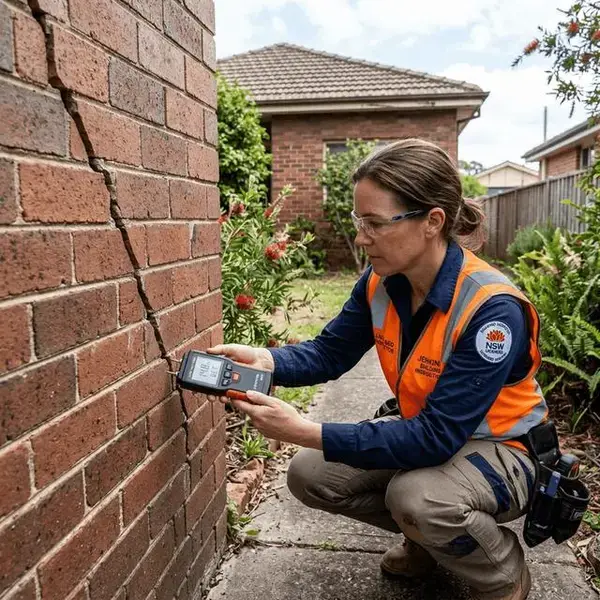
A CDC triggers a mandatory critical-stage inspection regime — pre-slab, frame, waterproofing, insulation, and final. These are non-negotiable under NSW building legislation regardless of the approval pathway.
What Happens After the CDC Is Issued?
Once your CDC is issued, it is a live legal document. Key post-CDC steps:
- Construction Certificate (not needed — CDC replaces both): The CDC combines the planning approval and the CC into one certificate.
- Construction commencement: Can begin as soon as the CDC is issued.
- Critical-stage inspections: Your certifier books and attends each mandatory stage.
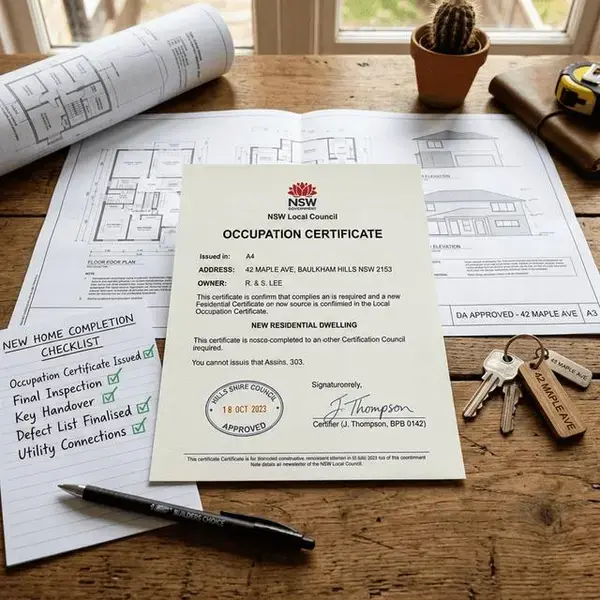
- Occupation Certificate (OC): Issued after the final inspection confirms construction matches the approved plans.
Without an OC, you cannot legally occupy the building, and your insurance policy may be void.
The No1 Building Services CDC Process
Our streamlined process eliminates the friction that slows most approvals:
- Day 1 — Submit Plans: Upload your architectural drawings, site plan, BASIX certificate, and engineering reports via our portal.
- Days 1–5 — Technical Review: We check NCC, BCA, BASIX, setbacks, site coverage, and height compliance in parallel.
- Days 5–10 — Conditions (if any): We call you directly — never via council — to resolve anything outstanding.
- Day 10–14 — Certificate Issued: Your CDC is signed, stamped, and sent. Your builder can mobilise.
- During Build — Stage Inspections: We attend every critical stage on a pre-agreed schedule that keeps your build program moving.
- Completion — OC Issued: Final on-site inspection, certificate signed. Legal occupancy begins.
Frequently Asked Questions
Can I get a CDC if my neighbour has objected to my project?
Yes. CDCs are not subject to neighbour notification or objection. Once your plans comply with the objective code requirements, the certificate must be issued. A neighbour’s objection is not a legal ground for refusal.
My lot is on a corner — does that change the setbacks?
Yes. Corner lots have specific setback calculations under SEPP Housing 2021 — the secondary street setback is typically 2 m (not the 4.5 m primary street setback). Our assessment includes a full corner lot compliance check.
Can a certifier refuse a CDC?
A certifier can only refuse a CDC if the development does not comply with the applicable code. They cannot refuse it based on aesthetics, neighbourhood opinion, or policy preferences. If your plans comply, the certificate is issued.
How long is a CDC valid?
A CDC issued under SEPP Housing 2021 for a new dwelling is valid for 5 years from the issue date. Construction must commence within this period.
The Bottom Line
If your project is a standard residential or commercial development in NSW, the CDC pathway through a private certifier will almost certainly be faster, cheaper, and more predictable than a DA through council.
The question isn’t really “CDC or DA?” — it’s “does my project qualify for a CDC?” Our team can answer that in a 15-minute phone call, and we offer free CDC feasibility assessments for all new enquiries.
Ready to find out if your project qualifies? Get a free CDC feasibility assessment →